|
Peter Tibor Nagy (1963)
Professor, sociologist, historian
|
|
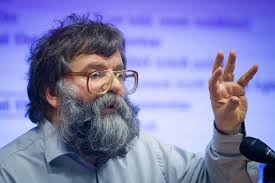
He was educated in Budapest, completing his studies with two PhDs (Education in 1991, History in 1995). He obtained his habilitation at the Philosophical Faculty in Debrecen (2000) and held a four years ‘Széchenyi lectureship grant’ at the ELTE (Eötvös Lóránd University in Budapest, Faculty of Social Science). In 2005 he became Doctor of Science of the Hungarian Academy of Sciences. In 2007 he became university professor. He got the academic prizes of the Hungarian Association of Sociologists (Erdei Prize for the best young sociologist 1993, Polanyi Prize for the best book of the year, 2011).
He is currently the head of Wesley Research Center for Sociology of Church and Religion in Budapest. President of the Scientific Council of John Wesley Theological College. He is founding member of Research Center for Sociology of Education and Youth at the ELTE (Eötvös Lóránd University in Budapest, Faculty of Social Science). He has PhD courses and PhD students at Doctoral School of Education, at Eötvös Lóránd University in Budapest, Faculty of Education and Psychology. Leade of Doctoral School of Wesley (under accreditation)
He is the president of the Section of Sociology of Education of Hungarian Association of Sociologists. He is member of the Subcommittee of History of Education of Hungarian Academy of Sciences. He has been founding member of Subcommittee of Sociology of Education of Hungarian Academy of Sciences.
Earlier positions: In the 1990s and 2000s he was a research adviser at the Hungarian Institute of Educational Research. In the 1990s he was founding member of Doctoral School of Education at University of Debrecen. In the 2000s he was founding director of the PhD Program in the History of Education at the University of Pécs.
He was lecturer in several international conferences and seminars in Austria, Belgium, Bosnia, Czech, Finland, France, Germany, Hungary, Israel, Italy, Moldova, Netherlands, Norway, Poland, Romania, Serbia, Slovenia, Spain, Sweden, Switzerland, UK, US.
He organised several conferences in the fields of history of 19-21st century education, sociology of higher education, sociology of education, women history, educational policy, history of churches in the 19-21st century, sociology of religion, sociology of social sciences, state-church relation, Jewish history, antisemitism, history of Israel, history of elite, sociology of elite, social mobility.
He was co-director of a European Research Council Advanced Research Grant, ( http://elites08.uni.hu ) led by Victor Karady about elite education in Central Europe and Baltics. He is co-leader of Hungarian Panel of a European project for sociology of social sciences.( http://interco-ssh.eu/en/ , http://nagypetertibor.uni.hu/ssh_interco/ssh_interco.htm ) . He is member of the staff of European Projects as https://novamigra.eu and https://www.facebook.com/inclusion4schools/
He publishes the digital version (database) of Hungarian Jewish Encyclopedia.
His main research interests include the history of educational provision in Central Europe, national schooling policies in a comparative perspective, secularization and the social standing of churches in contemporary Hungary, elite selection and training, the social inequalities in education, sociology and history of social sciences and humanities.
Author of 12 books and over 400 other titles in various languages.
Separate volumes in foreign languages:
In 1990s
The Meanings and Functions of Classical Studies in Hungary in the 18th-20th Centuries. Bp., OI, 1991.
The outlines of Hungarian Education 1500-1945. Bp., OI, Educatio, 1993. 19 p.
With Tjeldvoll, Arild (editing): Democracy or nationalism? Education in post-communist Europe. Oslo, Institute for Educational Research, University of Oslo, 1997. 344 p. (Report No. 3.)
In 2000s
with Victor Karady: Educational inequalities and denominations - a database for Transdanubia, Bp 2003, Oktatáskutató Intézet, – I.- II. vol. 220 p (2.: http://mek.oszk.hu/07900/07976/
with Victor Karady: Educational Inequalities and Denominations., 1910 Database for Western Slovakia, », Budapest, Wesley János Lelkészképző Főiskola, 2004. 200 p.
The social and political history of Hungarian education (MEK, OSZK, 2006)
With Arild Tjeldvoll and Anne Welle-Strand (editing)Balkan higher education challenged to change. Oslo, 2006. Centre of education management research (cem) Norwegian school of management.
with Victor Karady: Educational Inequalities and Denominations., 1910 Database for Eastern Slovakia, », Budapest, Wesley János Lelkészképző Főiskola, 2006.
with
Victor Karady: Educational Inequalities and Denominations., 1910 Database for
Transylvania, », Budapest, Wesley János Lelkészképző Főiskola, 2009.
In 2010s
with Victor Karady, (editing) The numerus clausus in Hungary: Studies on the First Anti-Jewish Law and Academic Anti-Semitism in Modern Central Europe. 276 p. Budapest: Central European University, 2012. (Research Reports on Central European History; 1.) (ISBN:978-963-88538-6-8) http://mek.oszk.hu/11100/11109/index.phtml
with
Victor Karady, (editing) Social sciences and humanities in Hungary 1945-2010:
Factbook about Hungarian social scientists
Budapest,
Magyarország : Wesley János Kiadó (2017) ISBN: 9786155048364
(with
Victor Karady) Sociology in Hungary
London,
Egyesült Királyság / Anglia : Springer International Publishing (2019)
Studies in foreign languages
In 1980s
French secondary school in Hungary 1932-1944. In: History of international relations in education, Ed. by S. Komlosi, Pécs, 1987.
The social and political status of Hungarian elementary school teachers. In: The social role and evolution of the teaching profession in historical context. Ed. by Simo Seppo. Joensuu, 1988.
In 1990s
University autonomy in Hungary. Myth and Reality. In: Arild Tjeldvoll (ed.): Education in East/Central Europe. University of Oslo, Oslo, 1991.
University autonomy in Hungary. Myth and Reality. In: Arild Tjeldvoll (ed.): Education in East/Central Europe. Report of the Oslo seminar. Special studies in comparative education No. 30 intr. by Philip G. Altbach. New York, 1992.
The Meanings and Functions of Classical Studies in Hungary in the 18th-20th Centuries. In: Aspects of Antiquity in the History of Education. (International Series for the History of Education ; Vol.3.) Ed. by F.-P. Hager et al. Hildesheim, Bildung und Wissenschaft, 1992. 191-203.p
Curriculum-Policy making debates in the 1990s. In: Strategies for curriculum development for primary school. Belgrade, 1995.
Háulpán vötafkidó In: Dialóg (Haifa, Israel), 1996. 1. 12-13 p 16-18. p. (Denominational structure of Hungary)
Háháskálá hágávohá böhungaria kijom In: Dialog (Haifa, Israel) 1996. 2. 20-23. p. (Higher Education in Hungary)
With Tjeldvoll, Arild : Democracy or nationalism? Education in post-communist Europe. In: Democracy or nationalism . Education in post-communist Europe. Oslo, Institute for Educational Research, University of Oslo, 1997. 3-24. p.
State - church relations in a post-communist educational system . The case of Hungary. In: Education for the 21st century. (European studies in education; 7.) Ed. by Christoph Wulf. Munster, New York, München, Berlin, Waxmann, 1998. 130-141. p.
Teaching history as teaching of pluralism. In: International Society for History Didactics, 1999. No. 1. 78-86. p.
In 2000s
One in Four. András Kovács: The Difference is Between Us: Anti-Semitism and the Young Elite. In: Budapest Review of BOOKS, Vol. 10. No. 1-2., spring-summer 2000., pp. 35-38.
Notnim sztatisztim ál jehudi Berettyóújfalu vömáhuz böjáher. In: Nesher Dávid, Gerő Zsuzsa (szerk.): Berettyóújfalu és környéke zsidóságának emlékkönyve. Haifa, 2001. (The social structure of Jews in Berettyoujfalu town)
A question of the educational policy of Hungary: Church - state relations in the 1990s. In: Religion, society and education in post-totalitarian societies of Central and South Eastern Europe. Ed. Sergiu Musteata. Chisinau, Arc, 2001. 27-37. p.
Sport and public education: The process of integration and segregation (The case of Hungary). In: Proceedings: Sport and Politics: 6 th Congress of the International Society for the History of Physical Education and Sport. Ed. by Katalin Szikora [et al.]. Bp., Semmelweis University, 2002. 20-23. p.
Teaching NATO within the framework of history – the Hungarian case. In: Teaching NATO and security policy. Brussels : NATO HQ, 2003. 25-29.p.
The state-church relations in the history of Educational policy of the first postcommunist Hungarian government. European Education, 2003. No. 1. 27-34.p.
The Academic Workplace. Country Report Hungary. In: Jürgen Enders, Egbert de Weert (editors): The International Attractiveness of the Academic Workplace in Europe. Shaping the European Area of Higher Education and Research. (Gewerkschaft Erziehung und Wissenschaft, Materialen und Dokumente Hochschule und Forschung, 107.) GEW - Hauptvorstand Vorstandbereich Hochschule un Forschung. Frankfurt/Main, 2004. 204-230. pp.
The numerus clausus in inter-war Hungary. East European Jewish Affairs Volume 35, Number 1, June 2005 pp. 13-22(10)
On the Anti-semitic Prejudice in Hungary Today. – Review of sociology Vol 12 (2006) 2 103-109
Élites canonisées au XIXème et XXème siècles ou comment construire une base de données relative aux élites ?” in Temps, espaces, langages. La Hongrie à la croisée des disciplines. Cahiers d’études hongroises 14-2, 2007-2008, tome II, Paris, L’Harmattan, pp. 113-131
Continuity in history textbooks in Eastern Europe (1980-2000) Iskolakultura online 2007 1 vol 47-53.p.
The University of Kolozsvár/Cluj and the Students of the Humanities and Science faculties (1872-1918) In: Intelectualii si societatea moderna. Repere central-europene. Szerk: Cornel Sigmirean. Targu-mures, 2007.Editura Universitatii "Petru maior" pp.339-370
The problem of the Confessional Recruitment of the Students at the Faculties of the Humanities and Science of the Transylvanian University. In: Historical Social Research Vol 33. (2008) 2 No. 124.
Educated elites and the Transsylvanian university (1872-1918) In: Tudásjavak áramlása a közép-kelet-európai régióban a rendszerváltást követően. Ed. Tibori Tímea. Magyar Szociológiai Társaság Belvedere Meridionale, Budapest-Szeged 2009
Religious education and childhood in Hungary (1949-1960) in: Kindheit-Schule-Erziehungswissenschaft in Mitteleuropa 1948-2008. Ed Johanna Hopfner/András Németh/ Éva Szabolcs- Peter Lang. Frankfurt am Main, 2009 33-46.p.
In 2010s
The level of education and its factors of the Hungarian Handicapped in the second half of the twentieth century , in: Attila Nobik/Bela Pukánszky (Hrsg.) Normalitat, Abnormalitat und Devianz. Peter Lang, Frankfurt am Main 2010. Erziehung in Wissenschaft und Praxis. Band 7. 125-138.p
Education and religiosity in Budapest at the Millenium. Social compass. International review of sociology of religion 2010. 1. no (57. vol) 60-82.p.
The
Level of Education and Religiosity in Budapest. In: Tilalomfák ellenében.
Köszöntő könyv Várdy Péter 75. születésnapjára. Szerkesztette Majsai Tamás,
WJLF Budapest 2010 117-148.p.
The
first anti-Jewish law in inter-war Europe In: Victor Karady, Peter Tibor Nagy
(szerk.) The numerus clausus in Hungary: Studies on the First Anti-Jewish Law
and Academic Anti-Semitism in Modern Central Europe. 276 p. Budapest: Central
European University, 2012. pp. 56-68. (Research Reports on Central European
History; 1.)
(with Victor Karady) Institutionalization and
Professionalization of the Social Sciences in Hungary Since 1945 In: Fleck, C;
Duller, M; Karády, V (szerk.) Shaping Human Science Disciplines.
Socio-Historical Studies of the Social and Human Sciences. Cham, Svájc :
Palgrave Macmillan (2018) pp. 289-325. , 38 p.
(with Victor Karady) A Case of State Controlled
Westernization.: Foreign Impacts in the Hungarian Social Sciences (1945-2015)
In: Heilbron, J Sorá G Boncourt T (szerk.) The Social and Human Sciences in
Global Power Relations Palgrave Macmillan, Cham (2018) pp. 297-332. Paper:
10.1007/978-3-319-73299-2_11 , 33 p.
The sociology of survival: the presence of the Budapest
Jewish population group of 1941 in the 1945 Budapest population In: Randolph, L
Braham; András, Kovács (szerk.) The Holocaust in Hungary : Seventy Years Later
Budapest, New York (NY), : Central European University Press, (2016) pp.
183-194. , 11 p
Lectures in English on the net
Differencies
and Parallelities of the Social Circumstances of Academic and Extra-Academic
Elite Groups in the Social Sciences: The Case of Hungary 1900-2000 https://www.youtube.com/watch?v=ioEWjiAWWbY&list=UUaTK_MP4BC2_MvXx2xlj7kg&hd=1
24
Break and continuity in the Hungarian social disciplines (productivity and achievements)
https://archive.org/details/CEU201504
30.5
The killed and survivors
http://oktatas.uni.hu/20201221.htm
Three goals of Hungarian educational policy in 2010s
http://oktatas.uni.hu/20200718.htm
Social Mobility
and Educational Innovations
https://web.archive.org/web/20180429024218/http://digitalcommons.spu.edu/av_events/1438/